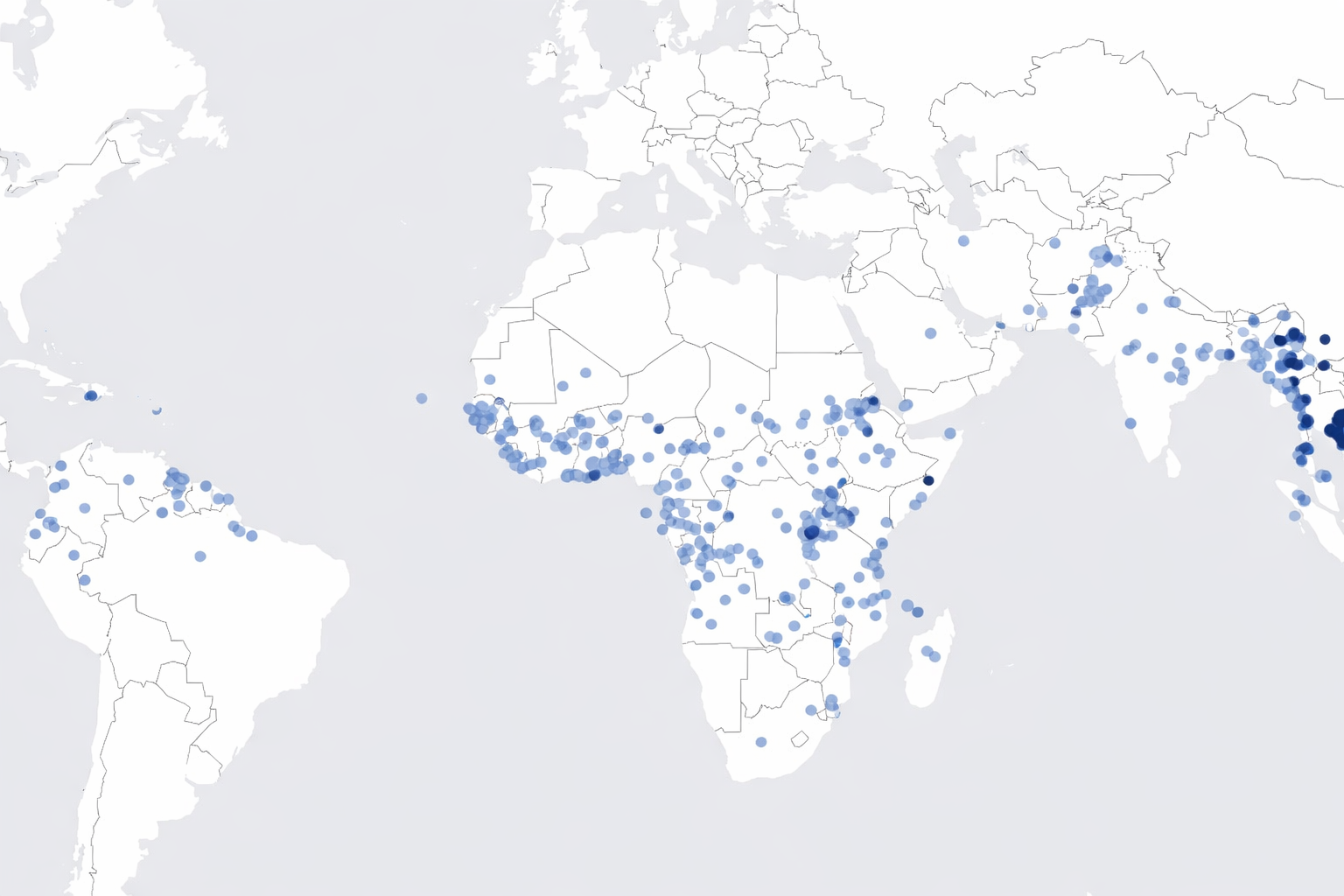
WHO figures paint an increasingly worrying picture for Africa’s health: 282 million cases of malaria and 610,000 deaths each year. Added to this persistent burden is now an unprecedented risk multiplier: climate change. By disrupting ecosystems, it is encouraging the spread of mosquito vectors to new regions, creating unexpected epidemic hotspots and redrawing the map of disease transmission.
A study led by researchers at the University of Oxford, published in late 2025 in Nature https://www.ox.ac.uk/news/2025-12-02-new-study-warns-creeping-catastrophe-climate-change-drives-global-rise-infectious surveyed 3,752 health experts in 151 countries. Their verdict is clear: the next major health emergency will probably not be a new, devastating virus, but the silent worsening of diseases we already know. They call this phenomenon a “creeping catastrophe,” fueled by three synergistic drivers: climate change (the top factor cited), socioeconomic inequalities, and antimicrobial resistance.
This warning is confirmed and quantified with unprecedented accuracy by a study published in The Lancet Planetary Health.https://www.thelancet.com/journals/lancet/article/PIIS0140-6736(25)01919-1/abstract, By cross-referencing several climate and demographic models, the researchers projected the evolution of malaria and dengue fever, the two main global vector-borne threats.
The Lancet study reveals significant localized trends:
As malaria gains altitude in tropical highlands (Africa, eastern Mediterranean, Americas), the transmission season could lengthen by an additional 1.6 months. Areas previously protected by altitude are becoming vulnerable.
The study published in The Lancet reveals significant localized trends:
As malaria gains altitude in tropical highlands (Africa, Eastern Mediterranean, Americas), the transmission season could lengthen by an additional 1.6 months. Areas previously protected by altitude are becoming vulnerable.
African experts interviewed identify malaria and dengue fever as the fastest-growing threats on the continent. These diseases are directly fueled by:
The geographical expansion of mosquitoes due to rising temperatures (high-altitude areas, previously spared, are becoming vulnerable). An increase in breeding sites linked to changes in rainfall patterns (flooding, stagnant water). To respond to these growing threats, we need urgent global climate action, combined with investment in new tools such as genetically modified mosquitoes to complement approaches to controlling mosquito-borne diseases. The central challenge today is strategic: it is imperative to direct investment towards the sustainable strengthening of African innovation capacities.
This strengthening is not simply an option, it is an urgent necessity. More and more stakeholders are calling for locally designed solutions, because only innovation rooted in the ecological, social, and economic realities of the continent can be relevant and sustainable.
Strengthening African research institutions, laboratories, and scientific teams means building sustainable autonomy in the face of health crises.